In this article
Textbook Arabic will get you through a form, but it will not get you through a conversation at an Egyptian family lunch. Egyptians constantly use short, colorful expressions that rarely appear in classes. Learn a handful of them and you will understand far more, and you will make people smile.
Here are 25 everyday Egyptian Arabic expressions that are friendly, safe to use and very common. (We left out rude slang on purpose.)
Words you will hear all day
1. يلّا (yalla) means “come on”, “let’s go”, “okay” or “hurry up”, depending on tone. It is probably the most useful word in the dialect.
2. خلاص (khalāṣ) means “enough”, “done”, “that is settled”, or “okay, that is it”.
3. معلش (maʿlesh) covers “sorry”, “never mind”, “it is okay” and “do not worry about it”. You will hear it after small accidents and delays.
4. ماشي (māshi) means “okay” or “deal”.
5. أوي (awi) means “very”. Gamīl awi (جميل أوي) is “very beautiful”, and kwayyes awi (كويس أوي) is “very good”.
6. دلوقتي (delwaʾti) means “now”. It is a classic Egyptian word that you will not hear in formal Arabic.
7. كده (keda) means “like this”, “so”, or “that is it”. Keda ʿaṭīm! (كده عظيم) is “that is great”.
8. تمام (tamām) means “perfect” or “all good”.
Expressions of politeness and warmth
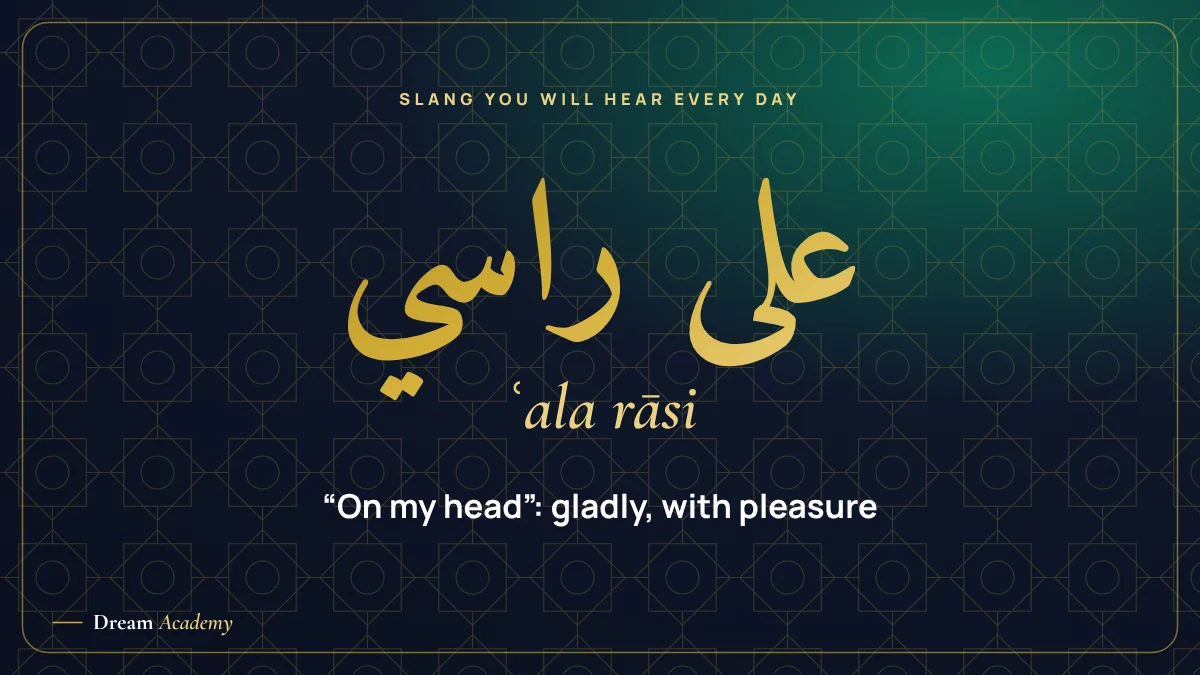
9. على راسي (ʿala rāsi) literally means “on my head”, and it is used to say “gladly” or “of course, with pleasure” when someone asks you for something.
10. تحت أمرك (taḥt amrak) means “at your service” (literally “under your command”).
11. تسلم إيدك (teslam eedak) means “bless your hands”. Say it to someone who cooked or helped.
12. حبيبي (ḥabībi) means “my dear”. Friends and shopkeepers use it casually. (To a woman, it is ḥabībti, حبيبتي.)
13. يا فندم (ya fandem) is a respectful “sir” or “madam”, often used at work and in shops.
14. صاحبي (ṣāḥbi) means “my friend” or “buddy”.
15. ما شاء الله (mashāʾ allāh) is said to express admiration, for example for a child, a new home or a talent. It also carries a wish of protection.
16. بالهنا والشفا (bel-hana wesh-shifa) is what you say to someone eating: “enjoy your meal”, literally “with joy and healing”.
Describing people and situations
17. دمّه خفيف (demmo khafīf) literally “his blood is light” means a person is charming and funny. It is a big compliment.
18. دمّه تقيل (demmo teʾīl) means “his blood is heavy”, so someone is annoying or hard to be around.
19. جامد (gāmed) literally “solid”, it is a young person’s word for “cool” or “awesome”.
20. ولا يهمّك (wala yehemmak) means “do not worry about it” or “it is nothing”.
21. كبّر دماغك (kabbar demāghak) literally “make your brain bigger”, and it means “do not stress about it” or “let it go”.
Small words that make you sound Egyptian
22. على فكرة (ʿala fekra) means “by the way”.
23. إيه ده؟ (eh da?) means “what is this?” It can also mean “what on earth?” when said with surprise.
24. إن شاء الله (inshāʾ allāh) means “God willing”. Egyptians use it for plans and promises, and the meaning can range from “yes, definitely” to “we will see”.
25. عيش (ʿeish) means “bread” in Egyptian Arabic, and it also literally means “life”, because bread is the center of daily life. Remember it for the bakery and for conversation.
A mini conversation using what you learned
Here is a short exchange you might hear at a café in Cairo:
| Who | Arabic | Pronunciation | Meaning |
|---|---|---|---|
| Friend | إزيك يا صاحبي؟ | ezzayyak ya ṣāḥbi? | How are you, my friend? |
| You | الحمد لله، تمام. وانت؟ | el-ḥamdu lillāh, tamām. wenta? | Fine, thank God, all good. And you? |
| Friend | ماشي الحال. عايز تشرب إيه؟ | māshi el-ḥāl. ʿāyez teshrab eh? | Getting by. What do you want to drink? |
| You | شاي لو سمحت | shāy law samaḥt | Tea, please |
| Friend | على راسي! | ʿala rāsi! | Gladly! |
| You | تسلم إيدك | teslam eedak | Thank you (bless your hands) |
Quick quiz
Test yourself. What does each expression mean?
- Maʿlesh (معلش)
- Demmo khafīf (دمّه خفيف)
- ʿAla rāsi (على راسي)
- Kabbar demāghak (كبّر دماغك)
- Bel-hana wesh-shifa (بالهنا والشفا)
Answers: 1) sorry or never mind, 2) he is funny and charming, 3) gladly, 4) do not stress about it, 5) enjoy your meal.
A few cultural tips
- Tone matters. Yalla can be friendly or impatient depending on how you say it.
- Start with warmth. Greetings and a few kind words go further than a perfectly built sentence.
- Listen first. Notice how people use an expression, then copy it.
- Be careful with unfamiliar slang. Some words are fine among close friends but rude in other settings. If you are unsure, ask your tutor.
How to learn slang the right way
Slang is best learned by listening to real conversations: family series, comedy, YouTube and conversations with native speakers. A tutor can explain the tone, the situation and the gender forms, so you use each expression correctly. Our live Arabic conversation classes are designed for exactly that. If you are new to the dialect, begin with the essential phrases for Cairo and the step-by-step roadmap.
Frequently asked questions
Is Egyptian slang the same across Egypt?
Many expressions are used everywhere, but some words are more common in Cairo than in Upper Egypt or Alexandria. The ones in this list are widely understood.
Can I use slang in formal situations?
Use more formal greetings with elders, officials and in business meetings, and save casual slang for friends and relaxed settings.
Should beginners learn slang?
Yes, a few expressions help you understand real speech and make conversation friendlier. Start with the ones you hear most, like yalla and maʿlesh.
Where can I hear these expressions?
In Egyptian series, comedy shows, YouTube and everyday conversation. Try repeating the lines you hear.
Want to speak like a local? Book a free trial class and learn everyday Egyptian Arabic with a live tutor.
Book Your Free Trial